Complete list of ICC chairmen and presidents (1909–2026): Full history & current chairman
Explore the complete list of ICC chairmen and presidents from 1909 to 2026, including the current ICC chairman.


The International Cricket Council (ICC) is the global governing body of cricket. It is responsible for managing the rules of the game, organising major international tournaments, and helping the sport grow across the world. Today, the ICC represents more than 100 member nations and plays a key role in the development of international cricket.
The ICC was founded on June 15, 1909, as the Imperial Cricket Conference by representatives from England, Australia, and South Africa. In 1965, the organisation was renamed the International Cricket Conference, before adopting its current name, the International Cricket Council, in 1987.
For many years, the ICC was led by its presidents. However, in 2016, the governing body abolished the role of ICC president and made the chairperson the highest leadership position. Since then, the ICC chairman has been responsible for leading the organisation and overseeing its major decisions.
This article provides the complete list of ICC presidents and chairmen from 1909 to 2026. It also explains how the ICC's leadership has evolved over the years and highlights the key figures who have helped shape the growth of international cricket, including the current ICC chairman.
List of All ICC Presidents (1989–2016)
The role of ICC President was introduced in 1989 to provide leadership for cricket's global governing body. The president represented the ICC at the international level and played an important role in the growth of the game. The position remained in place until 2016, when the ICC replaced it with the role of chairman.
Below is the complete list of all 12 ICC Presidents, along with their nationality and term in office.
| S. No. | Name | Nationality | Term |
|---|---|---|---|
| 1 | Colin Cowdrey | England | 1989–1993 |
| 2 | Clyde Walcott | West Indies | 1993–1997 |
| 3 | Jagmohan Dalmiya | India | 1997–2000 |
| 4 | Malcolm Gray | Australia | 2000–2003 |
| 5 | Ehsan Mani | Pakistan | 2003–2006 |
| 6 | Percy Sonn | South Africa | 2006–2007 |
| 7 | Ray Mali | South Africa | 2007–2008 |
| 8 | David Morgan | England | 2008–2010 |
| 9 | Sharad Pawar | India | 2010–2012 |
| 10 | Alan Isaac | New Zealand | 2012–2014 |
| 11 | Mustafa Kamal | Bangladesh | 2014–2015 |
| 12 | Zaheer Abbas | Pakistan | 2015–2016 |
12. Zaheer Abbas (2015–2016)
Former Pakistan captain Zaheer Abbas became the last ICC President in 2015. He served until 2016, when the ICC discontinued the role of president. Abbas was the third former international cricketer to hold the position after Colin Cowdrey and Clyde Walcott. He is also a member of the ICC Cricket Hall of Fame.
11. Mustafa Kamal (2014–2015)
Mustafa Kamal became ICC President in 2014 after serving as the organisation's vice-president. His tenure lasted one year, ending in 2015. He stepped down after raising concerns over governance and decision-making within the ICC.
10. Alan Isaac (2012–2014)
Alan Isaac began his cricket journey as a left-handed batter and later became president of New Zealand Cricket. He took over as ICC President in 2012 and served for two years. Before his cricket administration career, he spent more than three decades working with KPMG in New Zealand.
See also -
9. Sharad Pawar (2010–2012)
Sharad Pawar became the ninth ICC President in 2010. During his tenure, he worked to strengthen cricket administration around the world. He later served as president of the Mumbai Cricket Association and was awarded the Padma Vibhushan, India's second-highest civilian honour.
8. David Morgan (2008–2010)
David Morgan served as ICC President from 2008 to 2010. Before taking charge of the ICC, he was chairman of the England and Wales Cricket Board (ECB) and played an important role in English cricket administration.
7. Ray Mali (2007–2008)
Ray Mali became acting ICC President in 2007 following the death of Percy Sonn. He had earlier served as president of Cricket South Africa and was the first Black person to hold that position. Mali was widely respected for helping modernise South African cricket.
6. Percy Sonn (2006–2007)
South African lawyer Percy Sonn became ICC President in 2006. Unfortunately, his tenure ended after his death in 2007 at the age of 57. Before joining the ICC, he had a distinguished legal career and also served in South African cricket administration.
5. Ehsan Mani (2003–2006)
Ehsan Mani became ICC President in 2003 after representing the Pakistan Cricket Board for several years. A chartered accountant by profession, he played an important role in strengthening cricket administration during his tenure.
4. Malcolm Gray (2000–2003)
Malcolm Gray served as ICC President from 2000 to 2003. Before that, he was chairman of the Australian Cricket Board, where he helped oversee the growth of Australian cricket.
3. Jagmohan Dalmiya (1997–2000)
Jagmohan Dalmiya is regarded as one of the most influential administrators in cricket history. During his time as ICC President, the organisation's finances improved significantly, helping the ICC expand its global reach and commercial success.
2. Clyde Walcott (1993–1997)
West Indies great Sir Clyde Walcott became ICC President in 1993. He was the first non-English and non-white person to hold the position. Before entering administration, Walcott enjoyed a remarkable Test career, scoring 3,798 runs in 44 matches.
1. Colin Cowdrey (1989–1993)
Former England captain Colin Cowdrey became the first-ever ICC President in 1989. One of England's greatest batters, he played 114 Test matches and was the first cricketer to appear in 100 Tests. His appointment marked the beginning of the ICC's modern leadership structure.
ICC Chairman List (2014–Present)
The role of ICC Chairman was introduced in 2014 to strengthen the leadership of cricket's global governing body. For the first two years, the chairman and president worked together. In 2016, the ICC abolished the role of president, making the chairman the highest decision-making authority in the organisation.
Below is the complete list of ICC Chairmen from 2014 to the present.
| S. No. | Name | Nationality | Tenure |
|---|---|---|---|
| 1 | N. Srinivasan | India | 26 July 2014 – 9 November 2015 |
| 2 | Shashank Manohar | India | 22 November 2015 – 30 June 2020 |
| 3 | Imran Khwaja (Interim) | Singapore | 1 July 2020 – 23 November 2020 |
| 4 | Greg Barclay | New Zealand | 24 November 2020 – 30 November 2024 |
| 5 | Jay Shah | India | 1 December 2024 – Present |
5. Jay Shah (2024–Present)
Jay Shah is the current ICC Chairman. Before taking over the role in December 2024, he served as the Secretary of the BCCI and the President of the Asian Cricket Council. He was elected unopposed and is focused on expanding cricket globally, including its return to the Olympic Games at the 2028 Los Angeles Olympics.
4. Greg Barclay (2020–2024)
Greg Barclay became ICC Chairman in November 2020 after winning the election against Imran Khwaja. Before joining the ICC, he served as the chairman of New Zealand Cricket. During his tenure, he oversaw several major ICC events and helped guide the game through the post-pandemic period.
3. Imran Khwaja (Interim) (2020)
Imran Khwaja served as the interim ICC Chairman from July to November 2020 after Shashank Manohar stepped down. He had already been serving as the ICC Deputy Chairman and later continued in that role after Greg Barclay's appointment.
2. Shashank Manohar (2015–2020)
Shashank Manohar was the longest-serving ICC Chairman, holding the position for nearly five years. During his tenure, the ICC completed its transition from a president-led structure to a chairman-led system. He also introduced several governance reforms aimed at improving transparency within the organisation.
1. N. Srinivasan (2014–2015)
N. Srinivasan became the first-ever ICC Chairman when the position was created in 2014. Before joining the ICC, he served as the President of the Board of Control for Cricket in India (BCCI). His appointment marked the beginning of the ICC's modern leadership structure.
Why Did the ICC Replace the President with a Chairman?
In 2016, the ICC officially removed the role of president and made the chairman the organisation's top executive leader. The change was introduced to improve decision-making and provide stronger leadership as international cricket continued to grow.
The chairman now leads the ICC Board and oversees major decisions, while the ICC Chief Executive Officer (CEO) manages the organisation's day-to-day operations. This structure helps the ICC handle global expansion, media rights, commercial growth, and major international tournaments more effectively.
Does the ICC Chairman Receive a Salary?
The ICC Chairman does not receive a fixed salary. The position is honorary, although the chairman receives official allowances and benefits while carrying out ICC duties. This ensures the role remains focused on leadership rather than financial rewards.
Conclusion
The leadership of the International Cricket Council has changed significantly over the years. From the introduction of the ICC President in 1989 to the creation of the chairman's role in 2014, the organisation has continued to evolve with the changing needs of world cricket.
Today, the ICC Chairman leads the governing body and plays a key role in shaping the future of the sport. As cricket expands into new markets and prepares for its return to the Olympics in 2028, ICC leadership will remain central to the game's continued global growth.
About the Author

Sports run in my veins and stories fuel my pen. With over 3 years in journalism — including stints at Sportskeeda, Cricreads, and Athlete Fortune — I’ve lived every word I’ve written. A Madrista at heart and a CR7 devotee, I fell in love with cricket because of one man — Virat Kohli. His passion for the game taught me to see cricket beyond the numbers. Currently writing for Cricket Winner, I cover match analyses, player stories, stats-based features, and cricket news updates. When I’m not writing, you’ll find me glued to tennis courts or boxing rings, living the sport from every angle.
Watch Now
 Cricket News1 min
'We didn't approve the manner' — Devajit Saikia reveals why India women refused trophy from Mohsin Naqvi
 Cricket News1 min
Indian team celebrates with water bottle on podium after winning Women's Asia Cup 2026
 Cricket News1 min
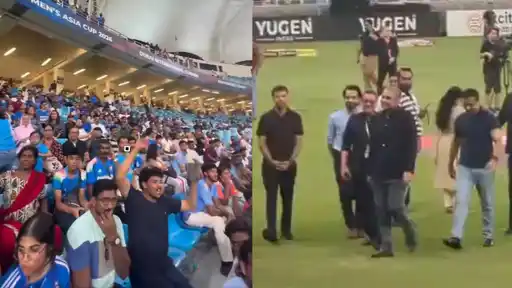
Fans chant 'Trophy Chor' after Indian women's team refuses to collect trophy from Mohsin Naqvi in Women's Asia Cup final
Web Stories
India vs New Zealand T20 World Cup 2026 Final
Sanju Samson’s 89 vs England Powers India in T20 World Cup 2026 Semifinal
Biggest Opening Partnerships in T20 World Cup Knockouts
India vs England T20 World Cup Semifinal History
New Zealand Knock Out Sri Lanka – Super 8 Match Highlights & Key Moments