India–Pakistan bilateral series to resume? Government of India introduces new sports policy
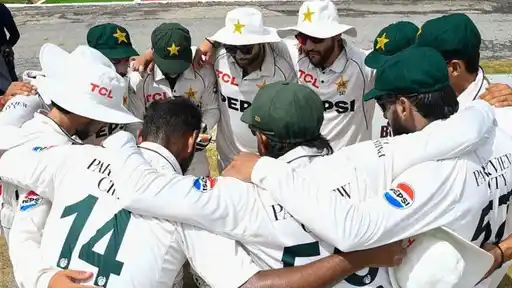
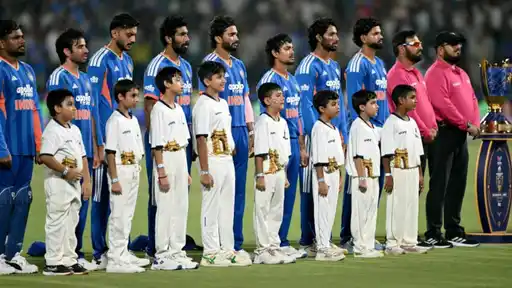
The Government of India has introduced the new sports policy in hosting international events in India a year after the Pahalgam terror attack which puts an effect on the BCCI-PCB relations.


At a crucial point when Idia has found itself in the position of being the global sporting destination with the hosting rights of the Commonwealth Games in 2030 and an aggressive pitch for the 2036 Olympics and the 2038 Asian Games, its government has relaxed a few sporting policies.
The Olympic Council of Asia (OCA) officials are set to visit Ahmedabad to evaluate the country’s bid. They will also host the Champions Trophy in 2029 and the 50-over World Cup in 2031, along with their neighbours, Bangladesh. And that is when the discussion will be about many countries traveling to India.
New sports policy hints at possible return of India–Pakistan cricket ties after long hiatus
Indian and Pakistan athletes are likely to be up against each other several times, at the Commonwealth Games in July-August and the Asian Games in September-October. They are set to be fighting in the Hockey games at least three times in the next few months in the FIH Pro League on June 23 and 26, before the World Cup in Amsterdam on August 19.
A year after the Pahalgam terror attacks and the Operation Sindoor, India has opened the door for Pakistani athletes and teams to compete on Indian soil in international events, besides clearing out the separation of bilateral ties for the sporting commitments.
See Also: IPL 2026: Injury or silent farewell for MS Dhoni? CSK official’s statement drops bombshell
“Insofar as bilateral sports events in each other’s country are concerned, Indian teams will not be participating in competitions in Pakistan. Nor will we permit Pakistani teams to play in India. We are guided by the practices of international sports bodies and the interests of our own sportspersons.” The policy draws attention.
“Indian teams and individual players will take part in international events that also have teams or players from Pakistan. Similarly, Pakistani players and teams will be able to participate in such multilateral events hosted by India.” It revealed.
What Board of Control for Cricket in India and Pakistan Cricket Board stance could be going forward
In cricketing terms, if the Shaheen Afridi-led side qualifies for the Champions Trophy 2029, then they will need to travel to India, or the games could mutually happen in Dubai as per the current agreement. Such a scenario will also take place during the World Cup 2031.
Recently, during the Asia Cup 2025 and the T20 World Cup 2026, both captains, Suryakumar Yadav and Salman Ali Agha, didn’t shake hands with each other at the toss, while the same stance was adopted by the entire side.
“About international and multilateral events, in India or abroad, we are guided by the practices of international sports bodies and the interests of our own sportspersons. It is also relevant to take into account India’s emergence as a credible venue to host international sports events.” The memo stated.
Why India–Pakistan bilateral series were halted and what has changed now
India last hosted Pakistan at home in a bilateral series in 2012 for the ODIs and T20Is. But the political relationship between the two Asian sides gets worse with time, which has a direct effect on the game. The bilateral series were halted, despite both sides facing each other in the ICC events regularly.
See Also: IPL 2026: Playoffs venues revealed as Ahmedabad replaces Bengaluru to host final
However, the last two meetings are quite different, due to the terror attack a year ago. In recent years, delays and uncertainties over visas for Pakistan or Pakistanis have drawn scrutiny from the global bodies. Notably, their cricket team last came to India in 2023 for the ODI World Cup and played the games in Hyderabad, Kolkata, Bengaluru, and Ahmedabad.
Potential impact on global cricket if arch-rivals resume bilateral contests
The impact will be on the positive side for the game if the bilateral contests resume between the two sides in global cricket. More engagements will come with broader revenue. In an era where a few formats, especially the Tests and ODIs, are dying, they will get a new way to survive.
In terms of rivalry and viewership, it will go through the roof. And a few players, who haven’t got the chances or perhaps never dreamt of it, will be able to fulfill it. The global economic value, which sometimes gets over 180 million dollars for a single game, will reach a significant position for the bilateral series.
About the Author

Massive cricket lover and follower of world cricket since mid 2000s. Like to frame the game through stats and numbers. Bit old-school cricket lover, who always get encouraged by Test cricket. Questions few complex rules which baffle the new viewers of the game. Have been working as a cricket writer for more than 5 years.
Watch Now
 Cricket News1 min
"Not a match-winner?" — Tanveer Ahmed's Babar Azam take sparks heated debate
 Cricket News1 min
"Don't underestimate" — Bihar-born Abhishek Anand's message for India ahead of Japan clash goes viral
 Cricket News1 min
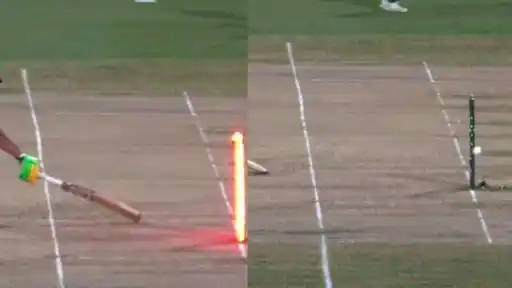
Mavendra Dindyal survives controversial run-out as bails take forever to fall in CPL 2026
Web Stories
India vs New Zealand T20 World Cup 2026 Final
Sanju Samson’s 89 vs England Powers India in T20 World Cup 2026 Semifinal

Biggest Opening Partnerships in T20 World Cup Knockouts
India vs England T20 World Cup Semifinal History
New Zealand Knock Out Sri Lanka – Super 8 Match Highlights & Key Moments