PBKS blew a 6-0 start and still missed the playoffs — Here are the 3 brutal reasons why
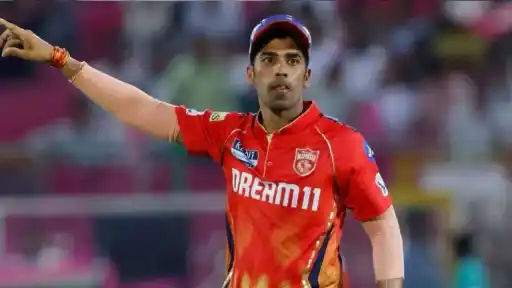
Punjab Kings looked like serious IPL 2026 title contenders after winning six of their first seven matches, but a shocking second-half collapse ended their playoff hopes. Poor death bowling, costly fielding mistakes, and an overdependence on the top order proved to be the biggest reasons behind their downfall.


Rajasthan Royals secured the fourth and final playoff spot in IPL 2026 after registering a convincing 30-run victory over the Mumbai Indians on Sunday. The result officially ended the playoff hopes of both Punjab Kings and Kolkata Knight Riders, bringing a disappointing end to their campaigns.
Among the biggest surprises of the season was the Punjab Kings’ dramatic downfall. After finishing runners-up to Royal Challengers Bengaluru in the IPL 2025 final, PBKS arrived in IPL 2026 with high expectations and looked every bit like genuine title contenders during the opening phase of the tournament. The team dominated early proceedings, winning six of their first seven matches and building strong momentum at the top of the points table.
However, their campaign completely lost direction in the second half of the season. A shocking run of six consecutive defeats exposed several weaknesses within the squad, pushing them out of playoff contention despite a desperate late attempt to stay alive in the race. Rather than being a case of bad luck, Punjab Kings’ elimination was largely the result of tactical mistakes, inconsistent performances, and missed opportunities. In this article, we take a closer look at the three major factors that led to PBKS’ disappointing exit from the IPL 2026 playoffs race.
1. Death bowling disaster: How Punjab's leakiest attack (economy: 11.71) undid every big chase they attempted
On paper, Punjab Kings entered IPL 2026 with a strong and balanced bowling attack. However, their bowlers failed to deliver consistently throughout the season, especially in the death overs. PBKS ended the league stage with the worst bowling economy rate in the tournament at 11.71, a statistic that ultimately played a massive role in their elimination. Lead pacer Arshdeep Singh featured in all 14 league matches but managed only 14 wickets at an average of 38.64 while conceding runs at an economy rate of 10.20. Veteran spinner Yuzvendra Chahal also endured a disappointing campaign, picking up 12 wickets in 14 games at an economy of 9.39.
The inconsistency extended across the entire bowling unit. Marco Jansen and Vijaykumar Vyshak showed flashes of brilliance in a few matches, but neither could maintain control during crucial moments. Both bowlers finished the season with nine wickets each while conceding over 10 runs per over. Punjab’s inability to defend big totals became one of the defining stories of their campaign. They failed to protect 222 runs against the Rajasthan Royals in Mullanpur, conceded 235 against the Sunrisers Hyderabad in Hyderabad, and also lost despite posting 210 against the Delhi Capitals and 200 against the Mumbai Indians in Dharamsala. Against Royal Challengers Bengaluru, they conceded 222 runs while bowling first and could pick up only four wickets.
See also -6 wins in 7, then 4 straight losses: What actually went wrong for Punjab Kings in IPL 2026?
As the season progressed, Punjab’s bowling attack completely lost its edge at the worst possible time. Former India cricketer Akash Chopra pointed out that Arshdeep’s dip in form significantly hurt the team’s chances, with opposition batters attacking him aggressively in the latter half of the tournament. Lockie Ferguson also struggled to inspire confidence after expensive performances early in the season. Interestingly, Harpreet Brar, who had the team’s best economy rate of 7.50, featured in only two matches. Questions were also raised over the usage of Chahal, as PBKS failed to fully utilise one of their most experienced bowlers during crucial games. In the end, Punjab’s inability to control runs and close out matches proved to be one of the biggest reasons behind their IPL 2026 playoff exit.
2. Dropped catches, lost momentum — The fielding rot that Ricky Ponting couldn't stop
While Punjab Kings struggled with the ball in IPL 2026, their problems in the field made matters even worse. Throughout the season, Punjab Kings dropped 16 catches from 56 opportunities, one of the poorest fielding records in the tournament. In a format where matches are often decided by small moments, those missed chances repeatedly proved costly. The team also missed important stumping opportunities, allowing opposition batters to continue innings that later changed the course of games.
Head coach Ricky Ponting openly admitted that fielding errors became a major issue within the squad. Ponting described the problem as a “virus” spreading through the camp, while captain Shreyas Iyer called it one of the biggest reasons behind the team’s disappointing campaign. Shashank Singh endured a particularly difficult season in the field, dropping five relatively simple catches. Cooper Connolly and Lockie Ferguson also struggled under pressure, as PBKS repeatedly failed to hold on to crucial chances during key moments of matches.
Ponting later revealed that the coaching staff had spent extra time working on fielding drills in training, especially with players returning from injuries. However, the improvements never fully translated onto the field. As the season progressed, dropped catches became a recurring pattern that constantly shifted momentum away from Punjab Kings. For a side that started IPL 2026 as genuine title contenders, those costly mistakes eventually played a huge role in their dramatic collapse and playoff elimination.
3. Batting under pressure: Why Punjab's fearless top Order suddenly froze when it mattered most
Punjab Kings possessed one of the most explosive top orders in IPL 2026, with Priyansh Arya, Prabhsimran Singh, Cooper Connolly, and captain Shreyas Iyer carrying the batting unit for most of the season. The quartet produced several match-winning performances and consistently provided aggressive starts. Prabhsimran finished as PBKS’ leading run-scorer with 510 runs at a strike rate of 168.87, while Shreyas scored 498 runs with one century and five fifties. Connolly also enjoyed a strong campaign with 491 runs, including a hundred, whereas Priyansh Arya contributed 364 runs at an impressive strike rate of 211.62.
Despite those impressive numbers, Punjab’s batting lineup became overly dependent on the top four. Whenever the early wickets fell, the middle and lower order struggled to absorb pressure and rebuild innings. Unlike teams such as the Gujarat Titans, whose top-order batters consistently delivered throughout the season, PBKS lacked stability during crucial matches. GT openers Sai Sudharsan and Shubman Gill both crossed the 600-run mark in the league stage, while Jos Buttler added 469 runs. Punjab, on the other hand, suffered major batting collapses whenever their key batters failed to fire together.
Shreyas Iyer’s dip in form perfectly reflected Punjab’s downfall in the second half of the tournament. The PBKS skipper dominated the first seven matches, scoring 279 runs at a strike rate of 186, but managed only 118 runs at a strike rate of 126 in the next six league games. Although he produced a superb unbeaten century against Lucknow Super Giants in the final match, the damage had already been done. In the end, Punjab Kings’ playoff exit was not due to a lack of talent, but to poor decision-making and inconsistency in key moments. Frequent changes in the playing XI, underutilisation of important bowlers, and unresolved fielding issues created instability within the squad. As IPL 2026 comes to a close, coach Ricky Ponting and the team management will need to take a hard look at the mistakes that turned a promising season into a disappointing collapse.
Frequently Asked Questions
Punjab Kings were knocked out primarily due to their poor death bowling — the inability to defend totals or restrict opponents in the final overs (16–20) consistently cost them crucial matches, leaving them unable to qualify for the playoffs.
What was PBKS' biggest weakness in IPL 2026? Death bowling was their single biggest weakness. Conceding too many runs in the death overs allowed chasing teams to overhaul targets that should have been defendable, and also made it harder to chase down scores themselves when opponents had explosive finishers.
About the Author

A Madridista at heart, football is my first love, while cricket writing is my passion. Although Real Madrid sparked my love for football, Virat Kohli introduced me to the world of cricket. With over three years of journalism experience, I have written for Sportskeeda, Cricreads, and Athlete Fortune. I currently write for Cricket Winner, covering cricket news, match analysis, player stories, and statistics.
POLL

1,762
total votes
1/8/2027
end date
Watch Now
 Cricket News1 min
Rohit Sharma reveals the name of the ‘Garden’ boys on his show
 Cricket News1 min
Maheesh Theekshana copies Sunil Narine’s unique bowling action in PAK vs SL 1st T20I
 Cricket News1 min
Mayank Yadav’s 144 kmph rocket delivery knocks over Shimron Hetmyer for a golden duck in IND vs WI 2nd T20I
Web Stories

India vs New Zealand T20 World Cup 2026 Final
Sanju Samson’s 89 vs England Powers India in T20 World Cup 2026 Semifinal

Biggest Opening Partnerships in T20 World Cup Knockouts

India vs England T20 World Cup Semifinal History
New Zealand Knock Out Sri Lanka – Super 8 Match Highlights & Key Moments