Vinod Kambli's 1000 Test runs in 14 innings is still unbeaten — So why did he vanish from Test cricket?
Vinod Kambli scored 1,000 Test runs in just 14 innings — a record still unbeaten today. Here's how he rose fast, bonded with Sachin Tendulkar, and then suddenly vanished from Test cricket

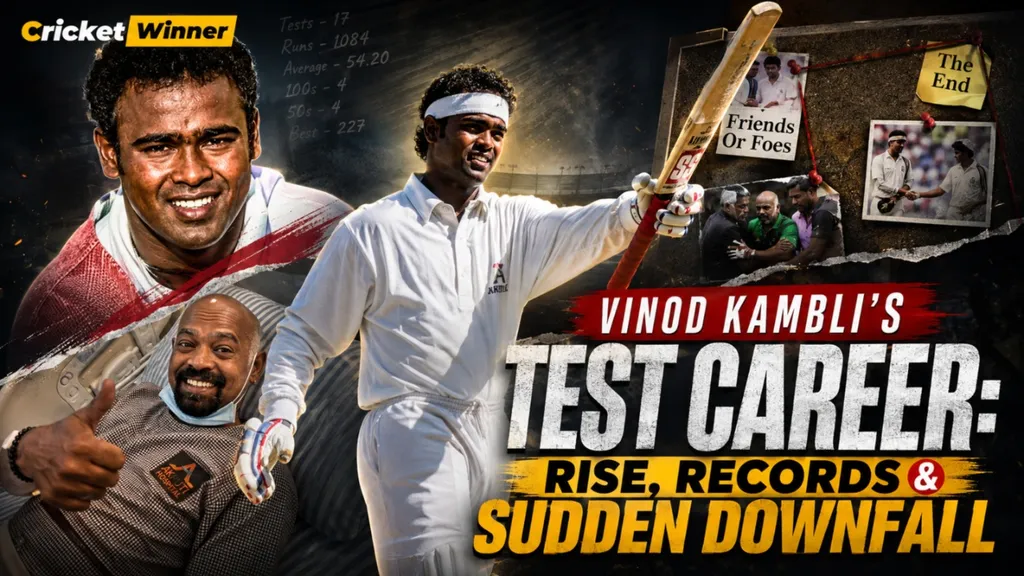
In the history of Indian cricket, Vinod Kambli’s career in the Test format remains one of cricket’s great yet unanswered topics. With scoring 1000 runs in just 14 innings of the longest format, Kambli achieved an extraordinary feat that placed him in the company of the game’s prolific batters. Despite the early success, Kambli had dark phases of the game.
Even decades later, the speed with which Kambli reached the milestone is a benchmark that remains untouched. The story is even more remarkable given how naturally those runs came from Kambli’s bat. He announced himself with a fearless batting approach and the ability to dominate various attacks, which looked helpless against him.
The Mumbai batter’s successive double centuries against England and Zimbabwe in 1993 confirmed the making of another superstar of the game for the blue brigade, who would rule the five-day format for years. However, the career that promised to be incredibly successful lasted for only 17 Tests between 1993 and 1995.
So, the million-dollar question remains: how did a player who seemed to be destined for greatness in Tests vanish so quickly? Was it due to his failure, form, and inconsistency with the bat? Or could Indian cricket have handled Kambli better in his career when he needed the most support?
Kambli’s story isn’t simply about a record that faded away. It reflected the massive gap between the potential of a player and the achievement in his career. It also confirmed that a superb beginning to a player’s career doesn’t guarantee a successful career. His career didn’t end the way it started.
The meteoric rise: How Vinod Kambli smashed back-to-back double centuries to announce himself
Kambli finished his Test career with 1084 runs in 21 innings at an average of 54.20 and a fine strike rate of nearly 60, with the help of four centuries and three half-centuries at the best score of 227 runs. But that was in the context of him collecting only 84 runs in the last 10 Tests of his career, which had only one fifty in his name.
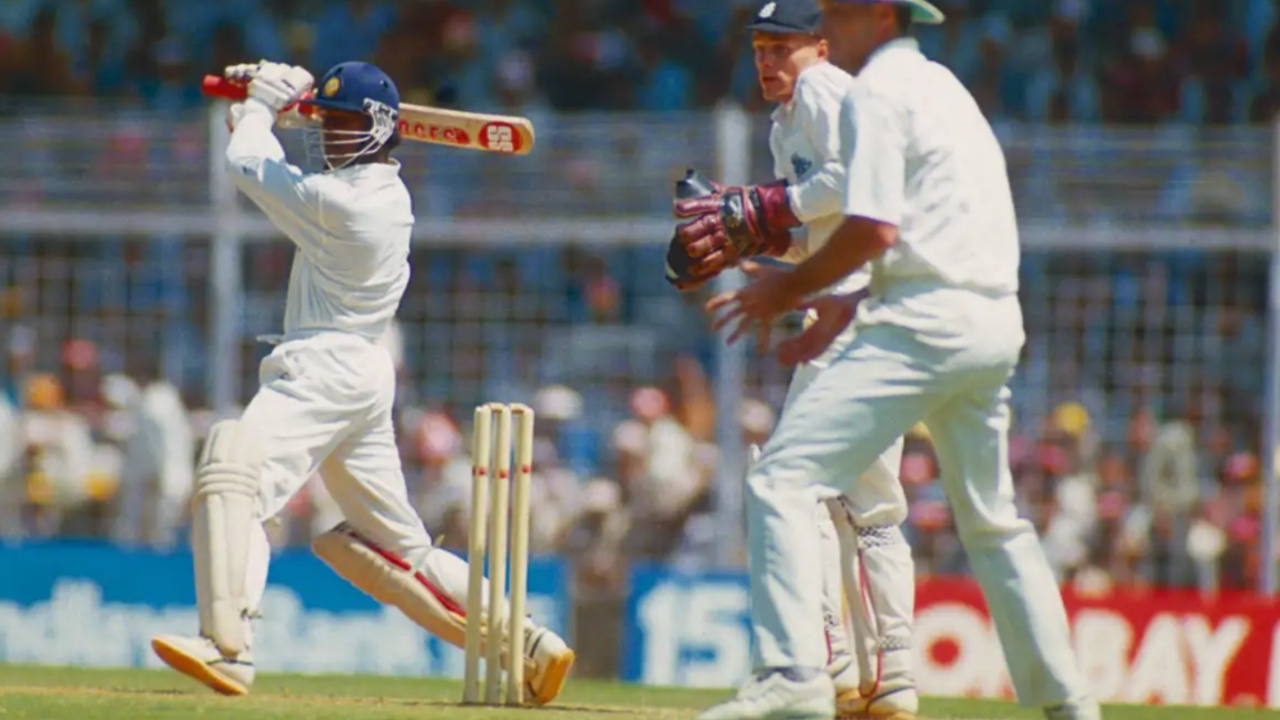
Between the beginning of 1993 and July 1995, Kambli was the third leading run-getter of the blue brigade in Tests for India, having smashed 1029 runs in 19 innings at an average of 57.16 and a strike rate of 60.28.
In his fourth innings of the Test format, Kambli smashed his first double-century against England in 1993 at the Wankhede Stadium. He ended up with 224 runs off 411 balls, thanks to 23 boundaries, while three other fifties in the scorecard helped the hosts to post 591 runs on the board and win the encounter by an innings and 15 runs.
See Also: Complete list of top 10 richest Pakistani cricketers in 2026 ft. Shaheen Afridi
His very next Test innings of the career came against Zimbabwe at the Firoz Shah Kotla (now named Arun Jaitley Stadium) in Delhi. Kambi clubbed a dashing knock of 227 in 301 balls at number three with 28 boundaries and helped them win the game by an innings and 15 runs.
India’s next Test series was in Sri Lanka when the left-handed batter smacked another dashing knock of 125 runs with 13 boundaries and one six in the first innings as the visitors won the contest by 235 runs in Colombo (SSC). In the very next Test at the Colombo (PSS), he smacked 120 off 241 balls with 15 boundaries and two sixes in the drawn contest.
Kambli also smashed two successive half-centuries against Sri Lanka in 1994 in Lucknow and Ahmedabad. At this time, the national team seemed to have found their upcoming superstar while Sachin Tendulkar was growing slowly in his own cricket. Kambli picked up the pace and earned fame.
Kambli and Sachin Tendulkar — A partnership that felt written in destiny
Long before becoming the icons of the game, Kambli and Tendulkar were the schoolboys at the Shardashram Vidyamandir. They were under the eagle eyes of the legendary coach Ramakant Achrekar. Both of them came from different backgrounds. Tendulkar was from a middle-class family, while Vinod came from a challenging life.
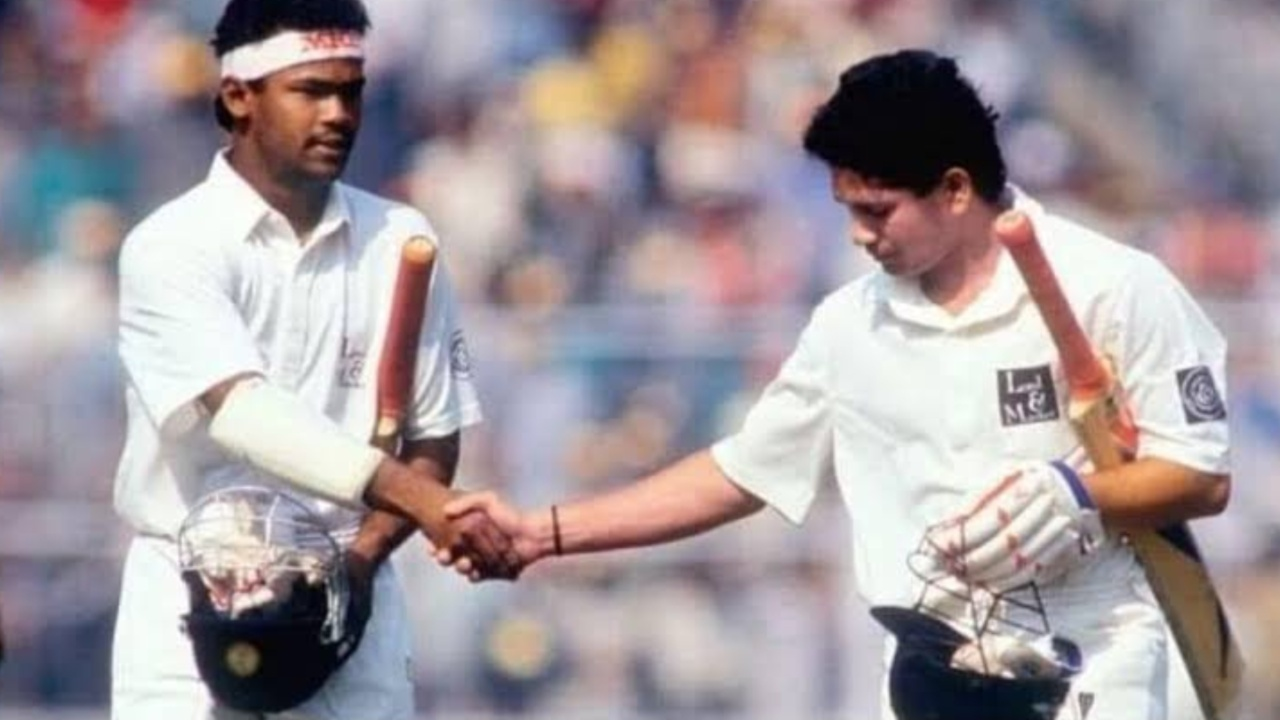
The ‘written in destiny’ was cemented on February 24, 1988, during the semifinal clash against St. Xavier’s High School in the Haris Shield. The two young lads recorded a world record of an unbroken partnership of 664 runs. Tendulkar drilled an unbeaten knock of 326 runs, while Kambli smashed 349* in the innings.
In 1993 at the Kotla against Zimbabwe, the duo put on a massive 227-run partnership for the fourth wicket. Kambli smashed a fine knock of 227 runs while Tendulkar anchored a superb knock of 81 runs. The two childhood friends remained an iconic image of Indian cricket in the 90s.
See Also: Top 10 biggest match-fixing scandals in cricket history: Which one shocked the fans the most?
Even during the dominant home and away series of the side in 1993/94 against Sri Lanka, the pair posted many fluid middle-order partnerships that took the game away from the opposition, where Kambli celebrated successive double centuries.
What made their record special was that both these two players were kids in that period. What made it memorable was that these two boys were also friends who didn’t want their fun with the bat to end.
Inconsistency, injuries and off-field troubles: Inside Kambli's sudden downfall
The last half-century for Kambli in his Test career was the 57-run knock against Sri Lanka in Ahmedabad in March 1994. Since then, the southpaw failed massively against New Zealand (both home and away) and West Indies.
In his last 10 innings with the bat, Kambli managed the highest score of 40 runs, which came against the Caribbean side in Mumbai. But out of those 10 innings, he registered three ducks, which came across the five innings with the bat. The average started to drop, his confidence faded away, and Kambli was dropped from the team after the Cuttack Test against the Kiwis on November 08, 1995.
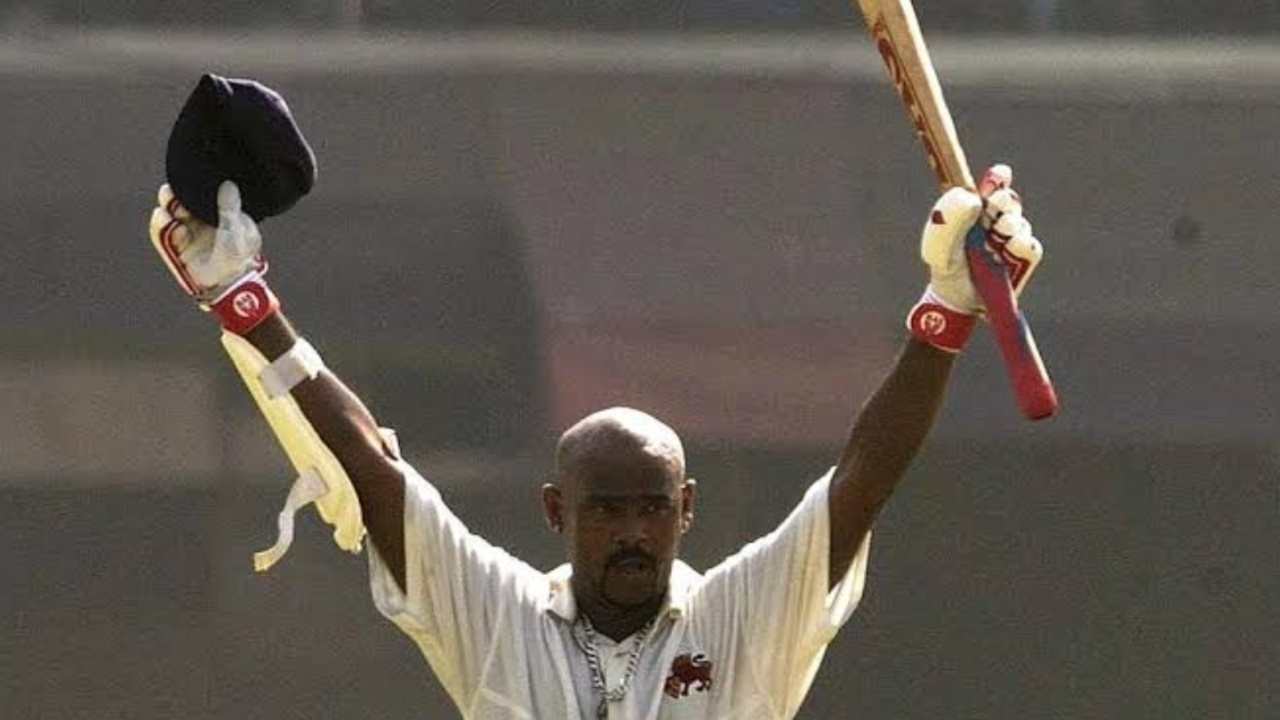
The short-ball trap was his biggest issue. The fast bowlers, especially from the West Indies, targeted Kambli with the regular short-pitched bowling. Outside the subcontinent conditions, his struggle was visible against the extreme pace and bounce of the opposition bowlers.
There was also the trauma of the 1996 ODI World Cup semifinal collapse against Sri Lanka at the Eden Gardens when Kambli, with water in his eyes, walked off the field amid the crowd riots that marked a mental shift.
The left-handed batter made nine separate comebacks into the Indian ODI side over the last nine years. Each of his returns put more pressure on the batter. In the comebacks, he averaged just around 20 across the final 35 ODIs. He fluctuated in form as some of the legendary middle-order batters, Sourav Ganguly, VVS Laxman, Rahul Dravid, and others, started to knock on the selectors' door.
See Also: Top 10 cheating controversies in cricket history —Incidents that rocked the game
The new generation of players cemented their position with strong and dominant performances. Apart from these, the off-field struggles and disciplinary issues came as a roadblock in Kambli’s life.
Reports started to emerge that Kambli was engaged in chronic alcohol abuse, poor discipline, and erratic behaviours during the different tours with the Indian side, along with the management and the Board of Control for Cricket in India (BCCI).
Following the major hospitalization in late 2024 for a urinary infection, the doctors found blood clots in his brain, as he needed physical assistance to walk and stand up. However, the good news is that his wife, Andrea Hewitt, updated that Kambli has currently been doing well and managing his health properly.
Where it all went wrong for Vinod Kambli — The untold story behind his exit
During the 1995 event in Sharjah, the veteran manager, Ajit Wadekar, suffered a heart attack. He instructed the captain, Mohammad Azharuddin, to change the batting order as they sent Atul Bedade ahead of Kambli, who walked in at number six and managed only 10 runs.

Furious at the change, Kambli returned to the dressing room and had a heated argument. The board records later revealed that Kambli verbally abused the captain for nearly an hour and a half, which didn’t create a good vibe in the dressing room.
The BCCI tried to send Kambli back home on many tours, but on Tendulkar’s special requests, they backed out. The southpaw was forced to submit a formal written promise to the BCCI, guaranteeing that he would never misbehave again.
When he was dropped from the side, no selector gave any valuable reason for their decision, and once Ganguly and Dravid came into the scene in 1996 during the England tour, Kambli's career ended suddenly.
See Also: Vinod Kambli web series: Who will play him? Cast & OTT details
His career reflects some valuable lessons for the young players who gain fame and recognition at a young age. Prithvi Shaw was one such example, as he smashed a century on his debut Test against the West Indies but has been out of the national side for the last five years due to disciplinary issues.
Currently, Vaibhav Sooryavanshi has been doing superbly in the Indian Premier League (IPL) and has made his debut for India in the T20Is. He would need to pay attention to these aspects too. Kambli was a shining star at the start of his career but saw a massive downfall that ended his career.
Vinod Kambli’s strong rise and sudden downfall- FAQs
Frequently Asked Questions
Vinod Kambli reached 1000 runs in Tests in just 14 innings, a feat that remains the fastest start by an Indian batter. He scored two successive double centuries in 1993.
The combination of inconsistent performances, injuries, fitness issues, and intense competition made a massive impact on Kambli’s Test career. There were questions around his relationship with the team management and the board members.
Kambli’s talent was rare, as he celebrated several records in domestic and international cricket. His downfall is viewed as a story of how potential and promise fell short before the power of discipline.
In ODIs, Kambli has bagged 2477 runs in 97 innings at an average of 32.59 and a strike rate of 71.94, thanks to two centuries and 14 half-centuries, with a best score of 106 runs.
About the Author

Massive cricket lover and follower of world cricket since mid 2000s. Like to frame the game through stats and numbers. Bit old-school cricket lover, who always get encouraged by Test cricket. Questions few complex rules which baffle the new viewers of the game. Have been working as a cricket writer for more than 5 years.
POLL
Watch Now
 Cricket News1 min
Babar Azam dismissed for 34 runs in ENG vs PAK ODI Tri-Series 2026
 Cricket News1 min
Fakhar Zaman falls for a golden duck to Atkinson against England in Rawalpindi
 Cricket News1 min
Hardik Pandya hugs fan who walked 2,390 Km to meet him and offers him a return ticket
Web Stories
India vs New Zealand T20 World Cup 2026 Final
Sanju Samson’s 89 vs England Powers India in T20 World Cup 2026 Semifinal

Biggest Opening Partnerships in T20 World Cup Knockouts

India vs England T20 World Cup Semifinal History
New Zealand Knock Out Sri Lanka – Super 8 Match Highlights & Key Moments