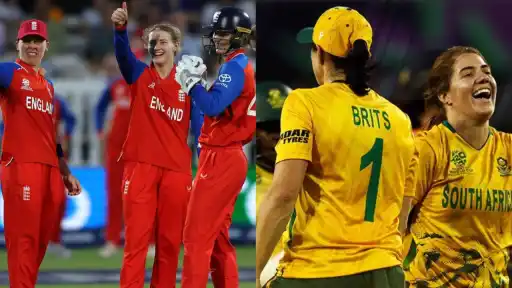
Women's T20 World Cup format explained — Groups, super 8s, semifinals and final all you need to know
Know everything about the ICC Women's T20 World Cup 2026 format, including the 12-team group stage, qualification pathway, points table, NRR rules, tiebreakers, semi-finals, and the final at Lord's


The ICC Women’s T20 World Cup is now one of the biggest events in world cricket. Each edition throws up nail-biting matches, finishes down to the wire and performances to remember from some of the biggest stars in the game. Although a lot of the fan focus is on what happens on the field, knowing the way the tournament works might make following the competition even more exciting.
The Women's T20 World Cup 2026 becomes historic as it will be the first edition to have 12 teams. The increase is a sign of how quickly women’s cricket is growing globally. More countries get to play on the biggest stage, ensuring the tournament will be more competitive and diverse than ever before. The tournament will be held in England and Wales from 12 June to 5 July 2026, with 33 matches being played at seven venues.
A brief history of the Women's T20 World Cup format
The Women’s T20 World Cup was first held in England in 2009. The first tournament was Featured only eight teams and had a simple format. Teams were divided into two groups, and the top teams from each group advanced to the knockout stage. Since women’s cricket was still developing worldwide then, a compact tournament enabled the ICC to establish the competition and to attract more fans to the sport.
As women's cricket became more popular, the tournament format changed. Between 2010 and 2014, the competition remained small, with only minor changes to the group stage. In 2016, a big step was taken when the number of nations was increased to 10. This enabled numbers of countries to compete at the highest level. From 2018 to 2024, the tournament followed a two-group, five-team format with the top two teams in each group qualifying for the knockout stage.
See Also: Most Runs in Women's T20 World Cup History — All-Time Top 10 Batters Updated 2026
The biggest change arrives in 2026 when the Women’s T20 World Cup is expanded to 12 teams for the first time. The decision is indicative of the exponential growth in women’s cricket worldwide. There are more nations playing competitively these days, and more fans are attending. Unlike the Men's T20 World Cup, there isn't a Super 8 round in the women's tournament. Teams also go directly from the group stage to the semi-finals, which means each and every game is crucial.
How the group stage works in the Women's T20 World Cup
The group stage is the backbone of the Women's T20 World Cup. The 12 teams competing in the tournament are split into two groups of six each. Each team competes against all the other teams in their group once, with five group-stage matches being played by each side.
The format is simple, yet very competitive. From each group, the best two teams advance to the semi-finals. As a result, eight teams will be eliminated before the knockout stage even begins. Unlike some tournaments that provide a second group phase, the Women's T20 World Cup offers very little room for error.
Teams earn points based on match results:
- Win = 2 points
- Loss = 0 points
- No Result = 1 point each
- Abandoned Match = 1 point each
Because every team plays only five matches, a single defeat can significantly affect qualification hopes. Even the strongest teams can be quickly put under pressure by a poor start, and a surprise win by an underdog can turn the standings completely.
The group stage will take place from 12 June to 28 June 2026, offering over two weeks of high-octane cricket ahead of the knockout stage.
Group 1 and Group 2 — The Women's T20 World Cup 2026 breakdown
12 participating teams in the ICC Women’s T20 World Cup 2026 have been divided into two groups of six. Each team will play five group matches, taking on every other team in its group once. The two best teams from every group will progress to the semi-finals.
| Group 1 | Status | Group 2 | Status |
| Australia | Six-time champions | England | Host nation |
| India | Title contender | New Zealand | Defending champions |
| South Africa | Back-to-back finalists | West Indies | 2016 champions |
| Pakistan | ICC Rankings qualifier | Sri Lanka | ICC Rankings qualifier |
| Bangladesh | Global Qualifier | Ireland | Global Qualifier |
| Netherlands | World Cup debutants | Scotland | Global Qualifier |
Group 1 looks set to be one of the most competitive groups of the tournament. Australia remains the most successful team in Women's T20 World Cup history and will rely on stars such as Alyssa Healy and Ashleigh Gardner. India's challenge will be led by captain Harmanpreet Kaur, opener Smriti Mandhana and explosive batter Shafali Verma. South Africa will once again look towards captain Laura Wolvaardt and experienced all-rounder Marizanne Kapp as they aim for another deep World Cup run.
Group 2 is equally challenging. Hosts England will enjoy home support throughout the tournament and will be led by world-class all-rounder Nat Sciver-Brunt. Defending champions New Zealand will once again depend heavily on star all-rounder Amelia Kerr, while the West Indies will look to captain Hayley Matthews for inspiration. Sri Lanka's hopes will largely rest on captain Chamari Athapaththu, one of the most destructive batters in women's cricket.
The group draw is important for that reason, because it could theoretically determine the semi-final pairings. The winner of Group 1 will play the runner-up of Group 2 in the first semifinal, and the winner of Group 2 will face the runner-up of Group 1 in semifinal 2. So finishing top gives you the chance of an easier route to the final.
How Teams Qualified for the 2026 Women's T20 World Cup
The process for qualifying for the 2026 Women’s T20 World Cup included a mix of automatic qualification, ICC rankings, and a global qualifier tournament. The system is designed to provide opportunities for the cricket establishments of the world as well as the emerging nations to participate in the game.
England qualified automatically as tournament hosts. Also, the best-performing teams from the 2024 Women’s T20 World Cup also qualified directly. Australia, India, New Zealand, South Africa, and West Indies all booked their places through their performances at the previous edition.
See Also: Most Wickets in Women's T20 World Cup History — All-Time Top Bowlers List Updated 2026
Pakistan and Sri Lanka qualified through their positions in the ICC Women's T20I rankings after the automatic qualification places had been allocated. They had been performing regularly in international cricket so they were given a place without had to go for additional qualifiers.
The other four places will be decided via the ICC Women's T20 World Cup Global Qualifier in early 2026. Bangladesh, Ireland, Scotland, and the Netherlands all achieved qualification. The Netherlands had made history by qualifying for the Women's T20 World Cup for the first time. Ireland captain Gaby Lewis and Netherlands pacer Tara Norris were among the standout performers during the qualification pathway to the tournament.
The Women's T20 World Cup 2026 tiebreaker rules
- Most Wins – The team with more wins will rank higher in the group standings.
- Net Run Rate (NRR) – If teams have the same number of wins, the team with the better NRR will be placed higher.
- Head-to-Head Result – If teams are still level, the team that won the match between the tied teams will get the higher position.
- Fewer Losses – If the tie remains, the team with less defeats in the tournament will rank higher.
- Drawing of Lots – If all other tiebreaks can not separate the teams, the final positioning will be determined by draw under the supervision of the ICC.
Tiebreakers most of the time are decided by Net Run Rate (NRR). In simple terms, Net Run Rate tells you how fast your team is scoring runs versus how fast it's giving its opponents an opportunity to score. NRR is calculated by the formula:
NRR = Runs Scored Per Over − Runs Conceded Per Over
Victory with a big margin makes NRR improve, and heavy defeats bring it down. That is why teams keep on attacking when the victory looks sure.
NRR has been the determining factor in many ICC tournaments and is the one statistic that both teams and fans keep their eyes on the entire group stage.
The Super Over — What happens if a match ends in a tie?
T20 cricket is designed to declare a result as far as possible. In the match that teams end with the same score after 20 overs, the game will be decided by a Super Over.
In a Super Over:
- Each team bats for one over.
- A maximum of two wickets can fall.
- The team scoring more runs wins.
- The winner receives the full two points.
- The loser receives zero points.
If the Super Over is tied as well, they go to another Super Over. This continues until someone wins.
See Also: ICC Women's T20 World Cup 2026 — Full Squads of All 10 Teams Announced
Super Overs have produced some of the most iconic moments in cricket as pressure is huge. The captains have to think very carefully about who their best batsman and their most reliable bowler are, because one mistake can decide the match.
The format encourages positive cricket and is designed to ensure that fans always get a result when possible.
The Semi-Finals — How the knockout stage works
In the semi-finals, Group 1 winner will meet Group 2 runner-up and Group 2 winner will meet Group 1 runner-up for a spot in the final. After the conclusion of group stage, only four teams are left in the hunt to get their hands on the Women's T20 World Cup trophy. The top two teams in each group advance to the semi-finals, with the other eight teams being knocked out. This is what makes the group stage so crucial, as every point can be the difference between a team staying on and heading home.
Both semi-finals were played at the historic The Oval, a particularly famous cricket ground in England. The 1st semi is on June 30 and the 2nd semi is on July 2.
The semifinal matchups are:
At the semi-final stage, the Group 1 winner will play the Group 2 runner-up and the winner of Group 2 will face the runner-up of Group 1 for the place in the final.
The cross-group format benefits the first-place teams in each group. Winning the group means a team will not have to face the winner of the other group but will face the runner-up instead, theoretically an easier path to the final. That said, there are no easy teams in a World Cup knockout game.
The semi-finals also have reserve days. If bad weather prevents a result on the scheduled day, the match can continue on the reserve day rather than being restarted from scratch. This gives teams a much better chance of earning qualification to the final on the field rather than through technical regulations.
An important rule to remember is that if a semi-final cannot be completed even after using the reserve day, the team that finished higher in the group stage advances to the final. This is another reason why every group-stage point and every improvement in Net Run Rate can become crucial later in the tournament.
The Final — The ultimate stage in Women's T20 World Cup
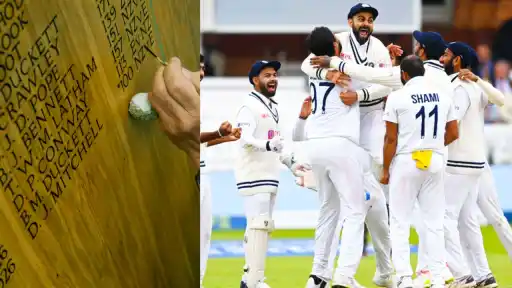
The Women's T20 World Cup 2026 Final will be played on 5 July at the Lord's Cricket Ground, often called as the ”Home of Cricket". The stadium can hold up to about 31,100 spectators, which made it the biggest ground in the tournament. For cricketers, making a World Cup final is a dream. At Lord’s, it’s just that bit extra special. The ground is renowned for its Honours Boards, its historic pavilion, the Long Room and for the unique slope which has challenged cricketers across generations.
See Also: ICC Women's T20 World Cup all-time winners list & history — Every champion from 2009 to 2024
The final will also have a reserve day to ensure that the tournament crowns a champion. If rain interrupts play, officials can use the reserve day to complete the match. If the scores are tied at the end of the final, a Super Over will be used to determine the winner. There is no shared trophy in modern ICC tournaments.
Interestingly, the Women's T20 World Cup started in England in 2009 and the 2026 tournament returns to one of cricket's iconic stadiums. Many players feel that winning a World Cup final at Lord’s is the ultimate success in the game.
Rain Rules and the DLS Method
Weather can be a significant factor in cricket tournaments, particularly in England, where rain interruptions are common during matches.
Cricket has a method to handle the rain-interrupted games called the Duckworth-Lewis (DLS) method. The target is recalculated according to the DLS system when overs are lost because of weather interruptions.
- DLS considers overs remaining.
- DLS considers wickets lost.
- The team batting second gets a revised target.
- The revised target has been calculated to result in a fair contest, despite the reduction in the number of overs.
A match should consist of a minimum of 5 overs per side during the group stage. However, for the semi-finals and the final, ICC regulations state that a minimum of 10 overs per side must be bowled to achieve a valid DLS result. If weather conditions prevent 10 overs from being completed in a knockout match, the game is declared a No Result. In the group stage, abandoned matches usually result in both teams receiving one point each. This can have a big impact on qualification scenarios and it frequently produces dramatic calculations on the final day.
Reserve days for the semi-finals and final reduce the likelihood that weather alone decides the tournament. Although teams would still rather qualify early, as rain can dramatically influence group standings.
The ICC Women’s T20 World Cup 2026 starts on June 12 with the hosts England meeting Sri Lanka in the tournament opener at Edgbaston, Birmingham. The first game will kick off the largest-ever Women’s T20 World Cup featuring 12 sides in 33 matches competing for the title.
Frequently Asked Questions
A total of 12 teams will compete in the Women's T20 World Cup 2026, making it the biggest edition in the tournament's history.
The 12 teams are divided into two groups of six, with the top two teams from each group advancing directly to the semi-finals.
No. Unlike the Men's T20 World Cup, the Women's tournament goes straight from the group stage to the semi-finals.
Each team will play five group-stage matches, facing every other team in its group once.
A Super Over will be played to determine the winner. If the Super Over is also tied, additional Super Overs will be played until a winner is decided.
About the Author

A cricket lover who enjoys writing about every match, player, and record. With 1+ year of experience in cricket content writing, I love sharing simple and engaging stories from the game. I focus on match recaps, player insights, and exciting cricket moments, making each article easy to read and enjoyable for every fan.
POLL

1,740
total votes
1/8/2027
end date
Watch Now
 Cricket News1 min
India refuse to take Women's Asia Cup 2026 title from Mohsin Naqvi
 Cricket News1 min
Highlights of Abhishek Sharma's sixes from the IND vs AFG 1st T20I in Delhi
 Cricket News1 min
"Our last conversation" — Sanjiv Goenka breaks silence on Rishabh Pant's trade to Delhi Capitals
Web Stories

India vs New Zealand T20 World Cup 2026 Final
Sanju Samson’s 89 vs England Powers India in T20 World Cup 2026 Semifinal

Biggest Opening Partnerships in T20 World Cup Knockouts

India vs England T20 World Cup Semifinal History
New Zealand Knock Out Sri Lanka – Super 8 Match Highlights & Key Moments